
The Hidden Link Between Your Posture and Your Stress Response
If you’ve noticed that your neck tension seems to spike on stressful days—or that your anxiety feels worse when you’ve been hunched over your laptop—you’re experiencing something real. The relationship between your posture and your nervous system is bidirectional: poor spinal alignment doesn’t just cause physical pain; it actively triggers your body’s stress response.
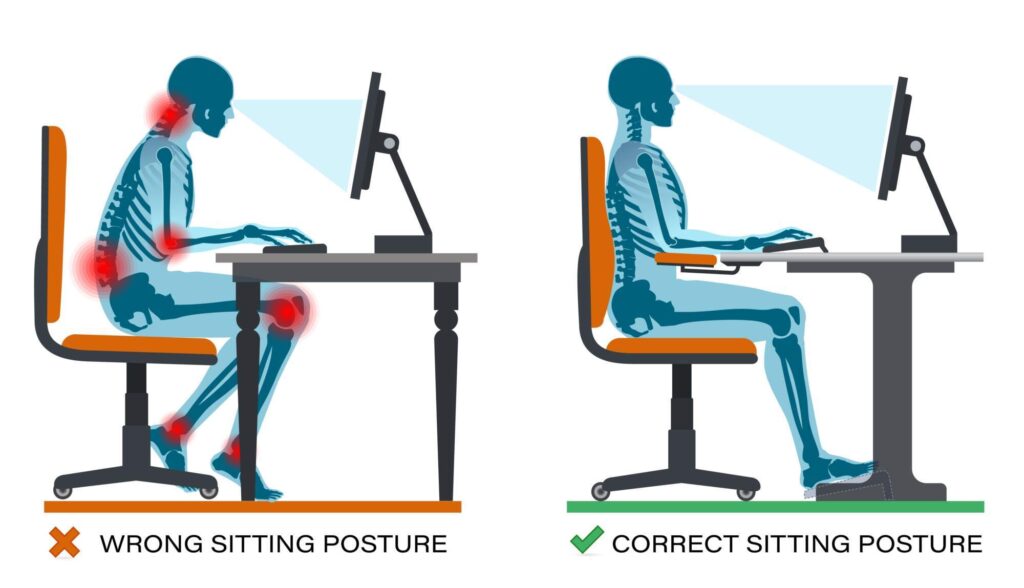
When you lean forward to read your screen, your head moves ahead of your shoulders. This forward head posture places enormous strain on your cervical spine and the muscles supporting it. But here’s the key: this position also compresses nerves and affects the vagus nerve, which plays a central role in regulating your parasympathetic nervous system—the part of your nervous system responsible for calming you down. When your posture compromises this nerve’s function, your sympathetic nervous system (the fight-or-flight response) becomes dominant, leaving you in a state of chronic low-level alert.
Screen Work Trains Your Body Into Stress Mode
Office workers and remote professionals spend an average of 6–8 hours per day looking at screens. Over time, this creates a feedback loop: sustained forward head posture triggers nervous system activation, which causes muscle tension and shallow breathing. Shallow breathing further signals danger to your body, reinforcing the stress state. You may find yourself clenching your jaw, hunching your shoulders, or feeling an unexplained sense of unease—all stemming partly from your spine’s position.
The biomechanical effect is measurable. Research in posture and neurology shows that forward head posture increases intracranial pressure and alters blood flow to the brain, potentially affecting mood regulation. Additionally, tension in the neck and upper back compresses nerves that carry sensory information to your brain, which your nervous system interprets as a threat—triggering cortisol and adrenaline release.
Breaking the Posture-Anxiety Cycle
The good news: you can interrupt this cycle through deliberate postural correction and ergonomic adjustment. Here’s how to start:
- Adjust your screen height. Your monitor should sit at eye level when you’re sitting upright. If it’s too low, you’re forced into forward head posture. If it’s too high, you strain your neck backward. Use a monitor stand, laptop riser, or stack of books to position it correctly.
- Take frequent breaks. Every 30 minutes, look away from your screen for at least 20 seconds. This gives your muscles a chance to relax and resets your nervous system. Stand and stretch—especially your chest, shoulders, and neck.
- Practice chin tucks. Gently draw your chin straight back (as if making a double chin) to engage your deep cervical stabilizers. Hold for 5 seconds, repeat 10 times. This simple exercise retrains your posture and activates calming neural pathways.
- Breathe deliberately. Forward posture restricts rib cage movement and encourages shallow breathing. Practice diaphragmatic breathing: breathe deeply through your nose for a count of 4, hold for 4, and exhale for 6. This activates your parasympathetic nervous system directly.
- Strengthen your upper back. Weak postural muscles allow your spine to collapse forward. Rows, reverse flyes, and scapular squeezes build the strength needed to hold upright posture without constant effort.
While ergonomic adjustments and posture awareness are essential, Dr. Hogle addresses the underlying spinal misalignments that develop from chronic screen posture. Spinal adjustments restore proper alignment, reduce nerve compression, and help rebalance your nervous system. Combined with postural retraining, chiropractic care from Dr. Hogle creates lasting change—not just symptom relief, but genuine structural and neurological improvement.
Many patients report that after receiving adjustments and learning proper ergonomics, their anxiety decreases noticeably, their neck tension resolves, and they feel more grounded. This isn’t coincidence; it’s your nervous system returning to a calm, regulated state.
If you’re experiencing neck tension, anxiety, or both, a wellness exam from Dr. Hogle can identify postural patterns and spinal issues contributing to your stress response. We can work with you to design an ergonomic setup for your workspace and develop a plan to restore spinal alignment and nervous system balance.
Call (480) 545-7988 or visit our contact page.